

Our eating habits are not solely shaped by our physical needs; our emotions greatly influence our eating habits.
Emotional Eating
Sena Soysal
Our eating habits are not shaped solely by our physical needs; our emotions greatly influence our eating habits.
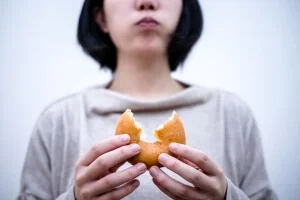
When we are happy, when we feel stressed, when we are surrounded by worries, we reach for unhealthy foods. We use food as a tool to cope with our emotions. The pleasure we derive from eating turns into feelings of guilt and regret once the meal is over, and we are left facing the reality that the difficult emotions we felt at the beginning have not disappeared but continue to exist.
Emotional eating behaviour begins where our spirit is trapped…
Distinguishing Emotional Hunger from Physical Hunger
There is a difference between emotional eating and eating based on physiological needs.
- Physical hunger arises as part of a process, while emotional hunger comes suddenly.
- With physical hunger, there is a feeling of satiety, while with emotional hunger, it is difficult to achieve a feeling of fullness.
- In physiological hunger, you are aware of what you are eating, whereas in emotional hunger, you eat ‘gorging’ without knowing what you are eating.
- In physiological hunger, you experience a feeling of satisfaction, whereas in emotional hunger, feelings of regret and guilt prevail.
- With physical hunger, you can stop yourself, whereas with emotional hunger, it is quite difficult to put on the brakes.
Why do we need emotional eating behaviour?
Our body is the only area under our control. Whatever we do, it gives us that; whatever we do, that is what we become… Eating behaviour that is not based on physical hunger emerges and takes shape with the desire to control negative emotions. It is triggered during intense emotional moments when we feel negative emotions and tends to be done alone, out of sight. After these behaviours, the person feels powerless, unsuccessful, worthless, and inadequate, losing control over the emotions they were trying to control.
Emotional eating and dieting
When we look at people who experience this process, we find that many of them have a history of strict dieting. This is no coincidence. The person has become so focused on controlling themselves that they may not be able to distinguish whether they are dieting of their own volition or because they ‘should.’ One reason diets fail is that the real problem is not food or weight. The person turns to food because of unresolved emotional issues.
Instead of trying to suppress our emotions or force them to change, focusing on what they are trying to tell us will help us process them more healthily. Recognising, accepting, understanding, and expressing are the fundamental components of the process that will reduce the need for emotional eating.
Continuing to endure situations in life that bother you as if there were no other way, or considering creating new paths for yourself… Which one feels closer to you?

Subscribe to the Psikeart Email Bulletin!
Subscribe to our Bulletin
Thank you for subscribing to the newsletter.
An error has occurred. Please try again.