
Man desires to be satisfied. To be satisfied, he must first feel hunger. This is man’s existential paradox.
Hunger and Diabetes
Prof. Dr. Şükrü Hatun
Koç University Faculty of Medicine
For many years, as a doctor who has seen children with Type 1 diabetes and often listened to their stories at the time of diagnosis, I thought about diabetes and hunger, but to be honest, if Emin Önder hadn’t asked me to write about it, I wouldn’t have been able to put these thoughts into words. In fact, I had previously written about ‘Poverty and Its Effects on Children’ and touched upon this topic from an endocrinologist’s perspective; I will now try to write something based on those thoughts.
The symptoms of children with Type 1 diabetes begin acutely (severely, suddenly, sharply) and sometimes include weight loss of up to 10 kg. Children become emaciated during this period and sometimes their subcutaneous fat tissue decreases to the point where they are ‘skin and bones’. Families find their own explanations for this weight loss and other symptoms of Type 1 diabetes (excessive thirst, frequent urination, increased appetite for sugary foods, fatigue, etc.) and delay taking their children to the doctor. The most common explanation they find for weight loss is ‘they grew taller, so we thought they lost weight.’ However, no child who grows taller loses weight, but families tend to think this way. Type 1 diabetes develops due to insulin deficiency, and without insulin, glucose uptake into cells in tissues other than the brain, erythrocytes, and renal medulla (meaning these are the most important tissues in the body’s energy conservation hierarchy) decreases to the point of near cessation. The cells then experience an energy deficiency, which we can call ‘endogenous starvation’. On the other hand, cells deprived of glucose use fatty acids (fat tissue) as an energy source, and at the end of this process, ketones are formed on the one hand, and children lose weight on the other. Due to both excessive ketone production and the inability to metabolise ketones, children eventually end up in hospital with a type of ‘intoxication’ called ‘ketoacidosis’. Of course, all these events are accompanied by insulin deficiency-related catabolic processes (the breakdown of fat tissue into fatty acids, proteins into amino acids, and glycogen into glucose), and the organism is seriously shaken at the end of this process.
This endogenous starvation seen in Type 1 diabetes (and actually in Type 2 diabetes too) creates similar effects in the body to, for example, starvation due to poverty or, as an extreme example, starvation strikes. Moreover, the effect of the recently fashionable ‘ketogenic diets’ is similar.
Hunger as a Form of Violence
Hunger is the name given to the feelings experienced by the organism when it cannot obtain sufficient energy and the reflection of these feelings. As everyone knows from their own experience, when one is hungry, symptoms such as ‘gnawing in the stomach area’, ‘headache’, ‘restlessness’, “irritability” and ‘lethargy’ first appear. Almost all of these symptoms are a kind of distress signal from the body, which has run out of energy. When the body cannot obtain energy-providing nutrients, it behaves as it would in a state of ‘sudden stress,’ and the levels of hormones called ‘stress hormones’ rise in both hunger and stress situations caused by any reason. Under normal conditions, we all obtain our daily energy from the food we eat. When we go without food for any reason (8-10 hours), the sugar (glycogen) stored in the liver is used first, followed by other tissues (such as muscle tissue), primarily adipose tissue, which are used as energy sources.
The human brain is the tissue that consumes the most energy (sugar) and, under normal conditions, requires 2-4 mg/kg/min of glucose. The human organism has two basic responses to hunger. The first is to quickly use reserve energy stores, and the second is to reduce energy consumption outside of neuronal cells to the lowest possible level. Therefore, in situations of prolonged starvation (as we know from hunger strikes), once the acute phase has passed, the organism establishes a new ‘homeostasis’ (balance) and reorganises its entire metabolism to ‘make do with less’. The most difficult period for the organism is when it first encounters hunger. During this period, a real alarm occurs due to the effect of hormones that kick in and strive to provide blood glucose. For this reason, from the newborn period onwards, hunger is the most important stimulus, and almost everyone is familiar with the ‘discomfort of hunger.’ When babies are hungry, they wake up crying and find ‘peace’ shortly after they start suckling their mothers. It is known that sugary foods make babies happy and peaceful from the newborn period onwards, which is why mothers dip their pacifiers in sugary foods (mostly honey) and give them to their babies. Nothing but the mother’s breast can comfort a hungry baby.
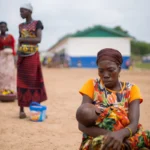
Hunger is a real form of violence for the organism, because the hormones that are activated during hunger are ‘destructive’ hormones. The hormones activated by hunger, primarily glucagon and catecholamines, first break down the glycogen in the liver, then the fat tissue, and finally the muscle tissue. Since the most important characteristic of violence is ‘destruction,’ defining hunger as biological/hormonal violence is not merely ‘metaphorical.’ Precisely for this reason, Mahatma Gandhi defined poverty, the most important cause of hunger, as ‘Poverty is the worst form of violence.’ This statement is true because it draws attention to the biological effects of poverty, but more importantly, because it gives a different meaning to poverty as a result of the market economy. As is well known, modern society has been disciplined by ‘hunger violence’ according to Marx and is therefore defined as a society “convinced” of the exploitation of ‘surplus value’.
Indeed, during starvation, an organic/psychological unrest/disorder similar to periods of ‘violence’ is experienced, and because of this, starvation has effects that extend into the future. The concept of ‘post-traumatic stress disorder,’ which has become popular in psychiatry in recent years, describes precisely such a process. The human (perhaps mammalian) organism experiences sudden and intense stresses that lead to a change in homeostasis as a trauma, and the biopsychological traces of this trauma affect later life. The traces of this shock remain on many systems, primarily the endocrine, immune and nervous systems. In other words, the organism has a biological memory, and all ‘stresses’ accumulate in the human body. The most significant stress for the human organism is exposure to unexpected and changing effects. For an organism that begins to experience hunger and adapts to it, even briefly gaining access to abundant food is a significant stress.
In addition to this ‘internal/hormonal’ violence associated with poverty, Necmi Erdoğan draws attention to the ‘emotional-symbolic violence’ that emerges with the following words: “…From the perspective of the people we interviewed, what makes poverty critical is not only the increasing and deepening social inequality and material deprivation, but also the emotional-symbolic violence that these create on themselves. In other words, the poor and subjugated are not only faced with dangers such as hunger, disease, freezing to death, etc.; they are also faced with a threat to their honour, self-respect and self-confidence, with symbolic violence” (Yoksulluk Halleri [States of Poverty], Erdoğan, 2002, p.45).
Adapting to hunger as a sadness and paradox
The saddest period for an organism ‘resisting’ hunger is the period of adaptation to prolonged hunger. During this period, everything slows down and the organism enters a ‘sad’ period that can be described as a kind of “hibernation”. This period can also be described as a biological ‘depression’.
When energy is insufficient, the ‘insulin receptors’ in many tissues work less, and the organism tries to send the glucose it has saved to the brain. Essentially, the principle of ‘economising’ applies during this period; attempts are made to economise on everything, primarily growth and metabolism. In other words, the organism enters a period of true ‘economising,’ where it ‘makes do with less.’ Less light means less life, but the lights still have to be ‘dimmed.’ All of this can be seen with the naked eye in an organism suffering from prolonged starvation, because the ‘shrinking’ of the human organism is immediately reflected in human behaviour. Therefore, Necmi Erdoğan is absolutely right when he says, ‘…the poor body is also a crushed, restricted body that wants to deny itself’ (Yoksulluk Halleri [States of Poverty], 2002). On the other hand, this ‘making do with less’ life adaptation prepares people for difficult situations. Perhaps this is why, in the military and in wars, poor village children are more reliable than ‘muhallebi children’ (children from affluent families), and this is also a handicap for them. That is why they die the most in wars. This is not the only handicap of the organism that makes do with little; recent research shows that human biology, which carries a genotype adapted to making do with little food over long historical periods, is helpless against a lifestyle that seeks to turn human bodies into consumption devices. To understand this process, we need the knowledge we have gained from ‘making do with little’ desert mice. In recent years, research on desert mice (these mice are named Psammomys obesus) has shown that it has been shown that mice that have been content with little food for a long time and therefore have a ‘thrifty genotype’ become obese and, more importantly, develop diabetes (Type 2 diabetes) when fed high-calorie foods in a laboratory environment. This finding is both a paradoxical result of chronic starvation and a consequence of the destructive impact of ‘civilisation’ on human biology. Consequently, the world’s impoverished regions are now forced to contend with a wave of chronic diseases such as obesity, diabetes, and heart disease, whose prevalence is steadily increasing after infectious diseases.
It should not be forgotten that the female body has an advantage in adapting to and resisting hunger and poverty. Thanks to their excess fat tissue, women have a greater capacity to store energy, both for themselves and, more importantly, for their children. For this reason, women adapt more easily to prolonged hunger, as has been seen during hunger strikes in our country. The female body is better organised in terms of its ability to ‘make do with less,’ and perhaps because of this
, the average life expectancy of women is higher than that of men in countries most affected by inequality. Most importantly, women gain weight during pregnancy because this allows them to store energy for their babies in fat cells and guarantees the 700 calories per day necessary for women to produce sufficient milk during breastfeeding. Beyond shielding their bodies from the consequences of poverty and hunger, women also play important roles in ‘managing what is not there,’ as Aksu Bora puts it, striving to protect their households from the effects of poverty (Bora, States of Poverty, 2002, p.65).
Instead of a conclusion
Returning to diabetes, to understand what happens during exogenous starvation, we must remember the severe shock experienced by children with Type 1 diabetes before insulin treatment began. Of course, the joyful times for children and for us are when, with insulin treatment, children revive/become happy like plants given water. The relationship between humans and energy or energy-providing carbohydrate-type foods is also a relationship of happiness. Recent studies have shown that appetite-suppressing drugs such as GLP-1 analogues can lead to depression, and that ketogenic diets recommended for weight loss or other reasons can trigger depression. In fact, exogenous starvation also has similar effects. In other words, poverty-related violence is also violence experienced at the cellular level, and unfortunately, there is no simple solution like administering insulin.

Subscribe to the Psikeart Email Bulletin!
Subscribe to our Bulletin
Thank you for subscribing to the newsletter.
An error has occurred. Please try again.