
In the broadest sense, hunger is a fundamental form of existence. We are born hungry.
Starvation
Nur Metin Korkmaz
In a general sense, hunger is a fundamental form of existence. We are born hungry.
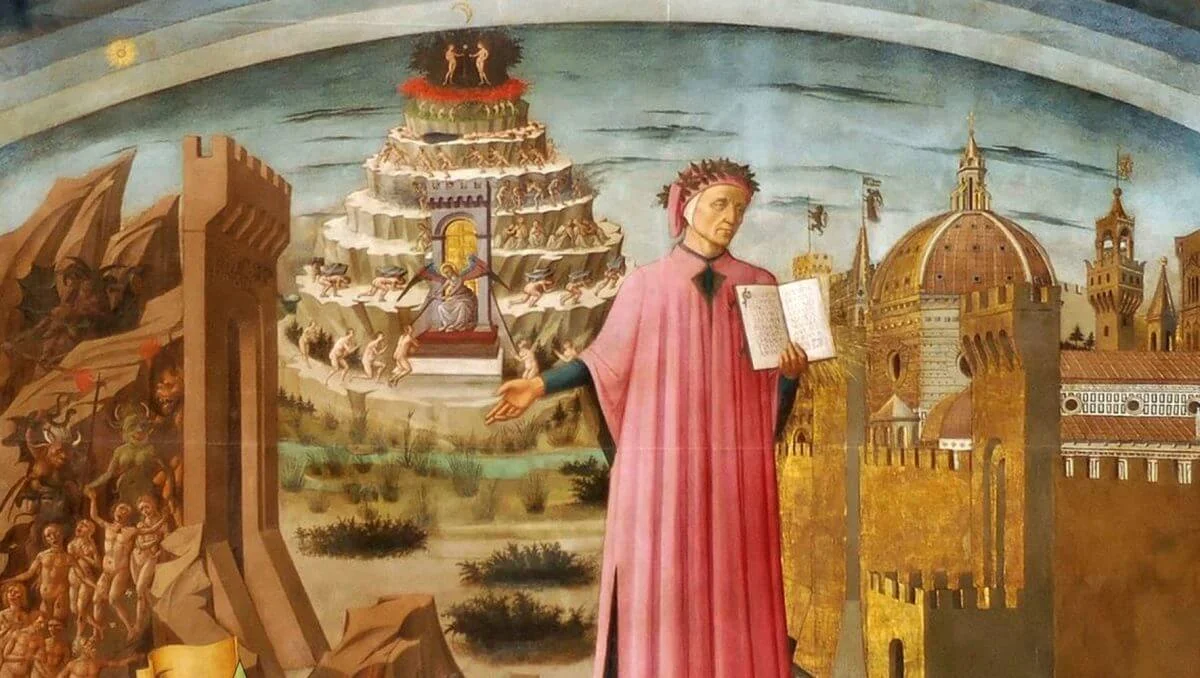
Hunger is a state we learn before we are even born, before we become acquainted with our other senses and impulses. Every human being is familiar with a series of physiological and psychological states associated with the act of eating. The satisfaction of hunger is one of our most complex and important ecological relationships. It takes approximately two months for a healthy adult to die from food deprivation alone, during which time the body and mind slowly shut down. Throughout history, hunger has forced people to migrate, caused wars and mass deaths, and has even been used as a weapon of oppression on many occasions. The pandemic we are currently experiencing has caused famine in many different parts of the world. During famine, the process of deprivation began to disrupt not only physical assets but also social bonds. Looting and violence increased in many parts of the world. The fear of hunger, added to the already unequal, hierarchical and exploitative structure of today’s society, caused violence to increase even further. Therefore, hunger should not be considered solely in terms of a decrease in food; it should be assessed as a high risk in a broader health and social context. Hunger is one of the most effective methods of punishment. A person who wants to punish themselves or others feeds on the pain and helplessness created by hunger. Hunger, the fear of hunger, and the sacrifices made to avoid hunger have been the subject of many different writers and poets. Dante is one of the writers who described hunger in different ways. In his work The Divine Comedy, Dante details the different states of hunger and emphasises the transformation of hunger, a human condition, into a divine structure.
Divina Commedia
The Divine Comedy was written by Dante, the great poet of Italian literature, in the first half of the fourteenth century and has been known as the most famous epic poem (epic) in world literature. It is an important masterpiece in world literature and narrates a journey through Hell, Purgatory and Heaven, respectively. It begins at the entrance to Hell and extends to the seven slopes of Purgatory Mountain, reaching the highest sphere of Heaven and heading towards eternity. At the end of Heaven is Beatrice.
Hell
It is believed that Dante completed Hell, the first part of the Divine Comedy, in 1308. Hell contains 34 cantos. The total number of lines in these cantos is 4720. Hell is a pit that narrows as one descends. This pit consists of nine concentric circles. Each circle is arranged according to the degree of sin. The further down one goes, the heavier the punishments become. People are placed in the circles of Hell according to the sins they committed while alive. In one of these circles are the souls who committed the sin of gluttony. The gluttons in this circle of Hell are tortured by a cold and foul rain. The three-headed glutton hound, Cerberus, guards these souls. Dante particularly notes Kerberos’s ‘three throats,’ pointing out that the beast is gluttonous like the sinners. Virgil fills Kerberos’s mouth with mud by throwing a clod of earth at the animal so that Dante and himself can pass by the beast. As they pass, Dante realises that the glutton’s greatest fear is being bitten and swallowed by a gluttonous creature like themselves. However, no such action occurs; the three-headed hound has no desire to bite or eat them. Kerberos is merely a guardian, ensuring the gluttons remain confined to their assigned circles, leaving the true punishment to the wind, rain, and snow.
The gluttonous souls in Hell are punished differently from the gluttonous shadows in Purgatory, which will be described later in the journey. In Purgatory, there is always an object to correct the souls’ desires. The presence of forbidden fruit on a tree or water rolling down a rock constantly reminds the shadows of their hunger. In contrast, the souls in Hell never feel this hunger or need. The removal of this physical desire from the sinners in Hell may initially seem like a kindness, but Dante reiterates that physical desires are a positive thing. Dante frequently emphasises that the resurrected body will serve a purpose in the afterlife.
Hell on Earth, the Tower of Hunger
At the end of Canto 32, Dante sees Ugolino violently biting the head of another sinner, Archbishop Ruggieri. Ugolino tells Dante that he cannot describe his own crime and allows Dante to determine which of the two is the greater sinner. The main emotion at the heart of the event is betrayal. Archbishop Ruggieri believes that Ugolino betrayed the emperor. He deceives Ugolino by promising to make a deal and traps him. The poet depicts Ugolino and Ruggieri in the same section of hell. This is because, according to him, the enmity between them was fuelled by mutual hatred and betrayal, and these two emotions warrant a place in hell. Like Archbishop Ruggieri, Count Ugolino is also guilty, having led his children to this tragic end through his ambitions and misguided choices, and these two enemies have been condemned to the same punishment in hell. Count Ugolino was accused of betraying the city of Pisa, allegedly handing over three of its castles to a neighbouring town, and for this he was locked in a tower there with his four children. One night, he imagined himself and his young children looking like wolves and dreamed that they were being torn apart while hunting. When he awoke, he found his children crying from hunger, but Ugolino heard that the doors had been locked and nailed shut. He immediately realised that he and his children would die of starvation. Seeing his children writhing in agony, Ugolino began to gnaw at his own hands in desperation, and his sons said, ‘Father, if you eat us, our pain will lessen.’ Upon hearing these words, Ugolino pulled himself together, swallowed his pain, and watched his children slowly starve to death over the fourth, fifth, and sixth days. Blinded by hunger, Ugolino waits by his children’s heads, talking to them as if they were still alive. Ugolino sums up what happened by saying, ‘Hunger finally achieved what pain could not.’ Perhaps the weight of his hunger outweighed his grief, or perhaps the hunger became so unbearable that he was forced to eat his children. The only certainty is that hunger destroyed Count Ugolino. Hunger took not only his children, but also his very self, his mind, everything. With an insatiable, endless hunger, he will continue to gnaw at Ruggiere’s head, tearing him apart forever in this hell. However, the pain he experiences in hell is perhaps milder than what he endured in the Tower of Hunger. Poor Ugolino, who watched his children writhe in hunger and die in despair, as if this pain were not enough, was forced to eat his children to suppress his unbearable hunger.
Purgatory
Purgatory contains 33 cantos, with a total of 4755 lines. According to Dante, Purgatory is a bridge between Hell and Heaven, inhabited by angels, where songs are often sung. As one ascends to the upper levels of Purgatory, the weight of sin and the punishment given decrease. The purpose of the punishment is to educate the soul and ensure repentance for sins.
To remain hungry, to remain in Purgatory
Purgatory frequently mentions two desires associated with sin. These desires are lust and hunger, which appear to be related to sinful excess. Both hunger and lust are referred to as the physical desires of the human body. Both serve as a way for people in the afterlife to redefine material pleasures on a spiritual level. The path from Purgatory to Paradise may be possible through this transformation. Lust is present in almost all of Dante’s vision of the afterlife. The Comedy is essentially a love poem, and Beatrice is depicted throughout the poem as a divine being. However, lust is a desire mentioned in the background or in the previous stories of the souls. Hunger, on the other hand, is at the forefront and is recounted among the difficulties souls encounter in the afterlife.
Statius explains that a soul in the afterlife can experience all five senses. The moment a soul reaches the designated shore in the afterlife, the air surrounding the soul takes on a physical form, containing a sensory composition. Statius implies that the soul has the ability to laugh and cry, as well as to see and hear. Souls can also feel, in different ways, through the air around them, what they feel with the organs of a body on earth, including sexual pleasure and taste through the sexual organs. Although souls have the ability to feel these pleasures, they must refrain from them. The re-materialisation of these pleasures is fundamental to the Purgatory process, and therefore the body and the senses have an important place in the afterlife. The soul itself is developed through bodily punishment. Emotional experiences are reorganised as something to be experienced spiritually.
Those who have committed the sin of gluttony are also punished in Purgatory. Souls who have committed this sin are forced to walk in a circle, constantly passing by a fragrant, fruit-bearing tree and water flowing from a rock. When Dante sees these souls, he is astonished by the emaciated bodies of the gluttons and questions how long the souls have been starving. Although souls do not need food to exist, the ‘hungry’ appearance of their bodies suggests that these souls live with a constant feeling of hunger. Apparently, the hunger of these souls has made the sins they must overcome even more apparent. Passing by fruit trees and water intensifies their hunger. Gluttony is the sixth sin to be punished in Purgatory, followed by lust. When Dante encounters the souls engulfed in flames, suffering the punishment for this last sin, he does not notice their hungry and emaciated appearance. In fact, it is understood that the souls punished for both gluttony and lust have changed in appearance and have an image of extreme emaciation from hunger. Those punished for the sixth sin continue on their way with an extremely emaciated physical appearance. For a soul to be able to receive any nourishment, its punishment for gluttony must be complete. Gluttons must also endure “spiritual hunger”. When souls are freed from these temptations, they move away from all states of extreme hunger, return to a state of “normality”, and are cleansed of gluttony.
The physical desire represented by hunger, in particular, not only brings souls closer to both human and divine natures, but also connects them to Dante. Dante wrote The Divine Comedy while in exile. Many different sources indicate that Dante suffered from hunger during his years in exile and could only fill his stomach when he was a guest of wealthy people. Historically speaking, during the years Dante lived, famine was widespread in Europe and mass starvation occurred due to the plague. The Comedy is a product of a time when bakers and millers became symbols of insecurity. In fact, Dante first sees Lucifer as a windmill in the deepest pit of hell. Hunger was the greatest fear of that era, and perhaps of every era. Lucifer’s three mouths eternally grind the poet’s treacherous trio: Judas, Brutus, and Cassius. Each of these three unfortunate individuals has their head and upper body torn apart by Lucifer, who has them in his mouths. Judas, Brutus and Cassius must not be swallowed, otherwise their punishment will cease. Lucifer is actually an angel and is far removed from human desires, so chewing on this trio does not arouse physical hunger in him.
Dante emphasises that physical desire is necessary; the re-evaluation of this desire is seen as a sign of the individual joining God in Heaven. The transition from physical desire to intellectual wholeness becomes the key to this process. Dante does not describe himself as having committed the sin of gluttony, because unlike the repentant souls surrounding him, he must continue to eat in order to survive. Consequently, hunger is positive as a desire. Dante emphasises that hunger is a state that provides an opportunity for the individual to connect with themselves and allows the soul to demonstrate its mastery over its own senses. The mastery established over hunger is the connection established with God.
Paradise
Paradise contains 33 cantos, with a total of 4,758 lines. Beatrice guides Dante throughout Paradise. Dante’s journey through Paradise, which begins on Thursday, 14 April, ends that same afternoon when he reaches the light of God. Dante drew on the Ptolemaic system when designing his plan of Paradise. According to Dante’s Paradise, the Earth is at the centre of the universe and is a fixed body. Here, God’s beloved servants, such as Mary and Beatrice, form a sacred rose. Here, humans are free from all flaws. Heaven is far from hunger. It is so far from hunger that even Dante’s hunger for Beatrice has ended.
Sources
Alighieri, Dante. The Divine Comedy. Trans. Rekin Teksoy. Istanbul: Oğlak, 1999.

Subscribe to the Psikeart Email Bulletin!
Subscribe to our Bulletin
Thank you for subscribing to the newsletter.
An error has occurred. Please try again.